The Cobra Registry

This registry is the end result of more than 30 years of in-depth research, information collecting and various attempts at verification of these cars. All of this has been done by a small number of supremely dedicated enthusiasts whose only reward is the knowledge that they have worked to the best of their abilities to produce something that solidifies the history of the cars created by Shelby American and companies affiliated with it. Along the way, they’ve helped create something that is the standard for all other car clubs. This book is more than just an attempt to keep track of the individual history, current whereabouts and last known owner of each and every car. As a totality, it defines what Cobras and Ford GTs are and specifically identifies which ones fit that definition. In this sense, the registry serves to protect the legacy that was created by these cars by providing specifics which can be used as a yardstick against which any cars purporting to be genuine can be measured. The mantle of legitimacy can be withheld from those cars that fall short, not by some solemn pronouncement from a club, but because of their obvious and readily observable shortcomings. A car’s serial number and its history are its pedigree, and one of the purposes of the registry is to protect the bloodline of the champions it represents from being diluted by fakes and impostors.

Between 1961 and 1968, Shelby American and AC Cars produced a total of 998 Cobras. At the time each production car was completed, the primary goal was to get it into the hands of the dealer and, by extension the customer, as quickly as possible. Once a car was completed and shipped to the dealer, payment was passed from the dealer to the manufacturer who, in turn, used this capital to pay past expenses and commit to new ones. Cash flow was a never-ending process and it was the primary factor which insured the continuation of the company—and by extension, the cars it would continue to produce. A problem with cash flow spread, like ripples on a pond, and affected every aspect of the business.

When the Cobras were being built, no one at Shelby American had the time to sit back and theorize about what value these cars might have ten, twenty or forty years into the future. Certainly no one, in their wildest dreams, could ever have thought that the cars they were building would some day fetch prices that would be, in the case of some Cobras, 100 times their original list price.

These cars have reached sometimes astronomical prices in recent years, and those not familiar with their history often assume they were originally constructed with all the love, devotion and attention to minute detail that they receive when going through a present day, no-expense-spared rotisserie restoration by an expert. Anyone involved with Cobras at the time of their construction is aware that nothing could be further from the truth. While it would be disingenuous to describe some aspect of their production as being “sloppy” or “slipshod” it would not be inaccurate to use terms like “crude” or “rough,” based on the fact that AC Cars’ and Shelby American’s assembly techniques were not as sophisticated as those found on a present day assembly line where repetitive operations are performed to a high standard of fit and finish. However, keep in mind that those standards were commensurate with the finished product. While the people at the top of the Shelby American organization like Phil Remington, Chuck Cantwell, Ken Miles or Peter Brock were highly skilled in what they did, they did not always have counterparts on the assembly line with equal levels of experience, proficiency and dedication. Individuals hired to perform day-to-day assembly work on the production line tended to be nearer the low end of the wage scale. As more and more cars are restored to white-glove elegance this aspect tends to be forgotten. The sometimes earthy crudeness of the early Cobras is part of what makes these cars what they are. Much of that is lost when a car is restored to perfection.

The Cobra Experience The Cobra Experience
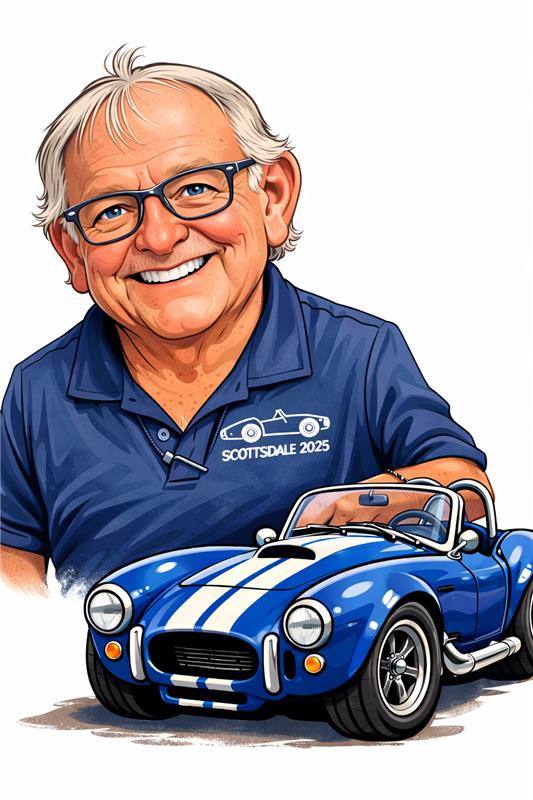
Ned Scudder

Ned Scudder

Cobra Registrar. Original Cobras have no better friend and spokesman than Ned Scudder.

To say he is extremely knowledgeable is a vast understatement, like saying the sun is warm to the touch. No one knows more about the history of these cars–both individually and as a whole–than he does. And he ought to.

He has been keeping tabs on them since 1970. Aside from his depth and breadth of knowledge, he has a memory that verges on total recall for serial numbers and details. Add to this an innate sense of fairness and a dash of dry wit accompanying a refined sense of humor and you get the one person who is more responsible than any other for the solid strength of Cobra history and values over the past twenty-five years. He is unimpeachable.

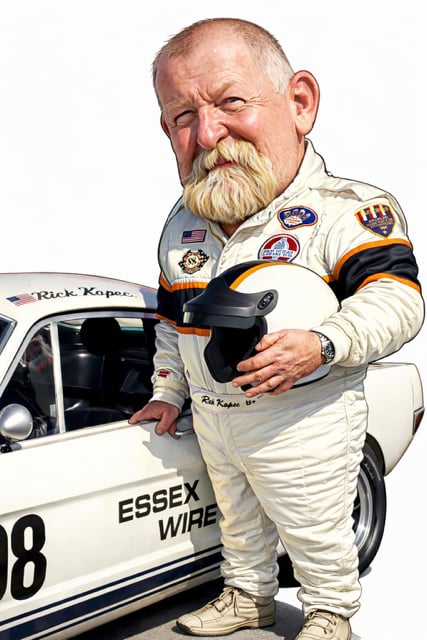
Rick Kopec

Rick Kopec

Editor. It's a tough job, but somebody's got to do it. Kopec has experience as a registry editor because he's had that job for all past SAAC registries, so there was no way he could get out of it.

Each book has been bigger and better, not to mention carrying more details. This registry, with all of its separate sections and intertwining information, had to be imagined before any of the data could be assembled. Once it was, it had to be massaged to fit.

The project began four years ago, and as the various chapters and sections were completed, they had to be fact-checked, proof-read and set into type. And let's not forget the photos. Each one had to be cropped and placed into proper spot on each page. It's a good thing he likes this kinda of work.

Join the Cobra Registry Preserve the History & Heritage of the Cobra

Get Started