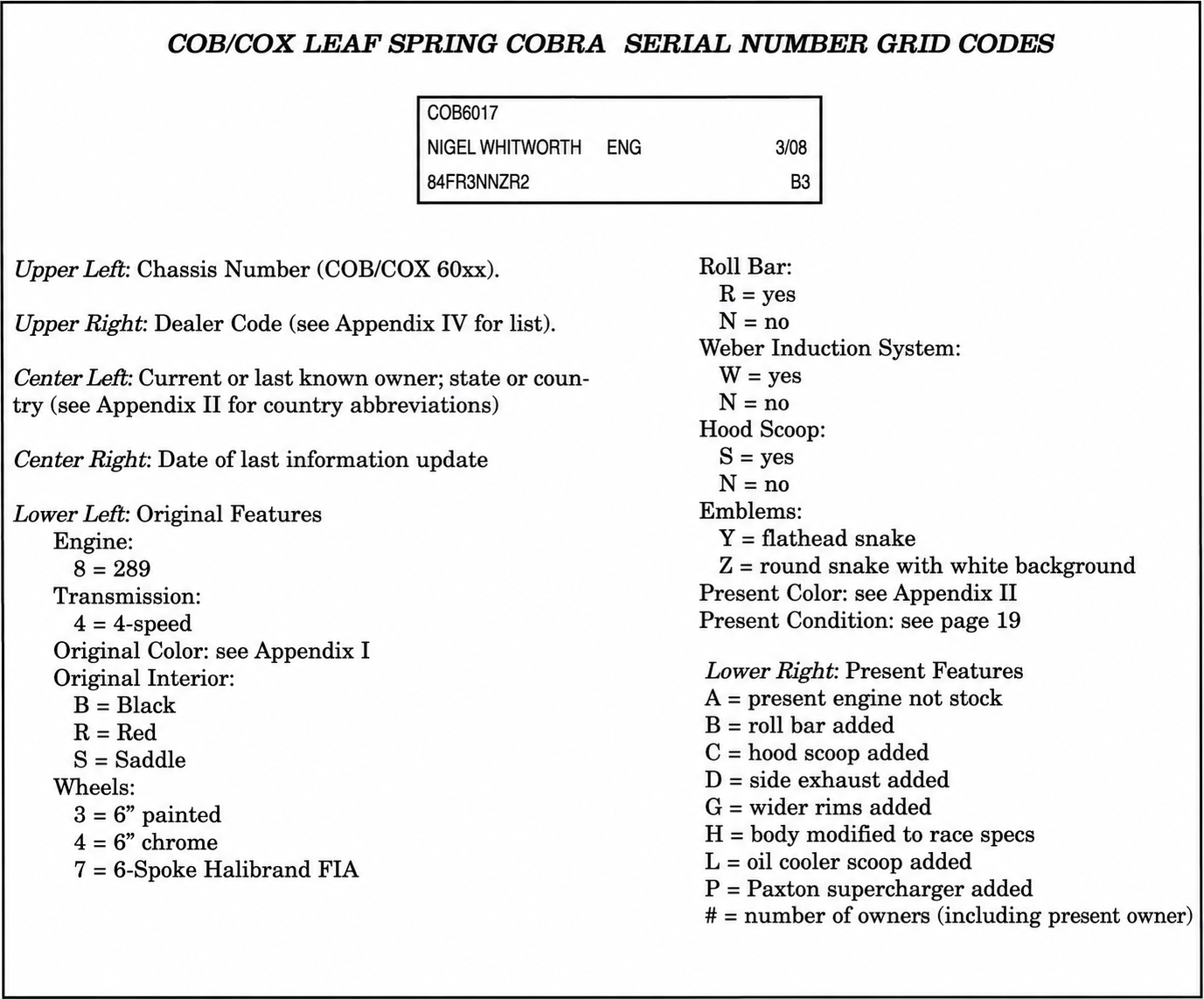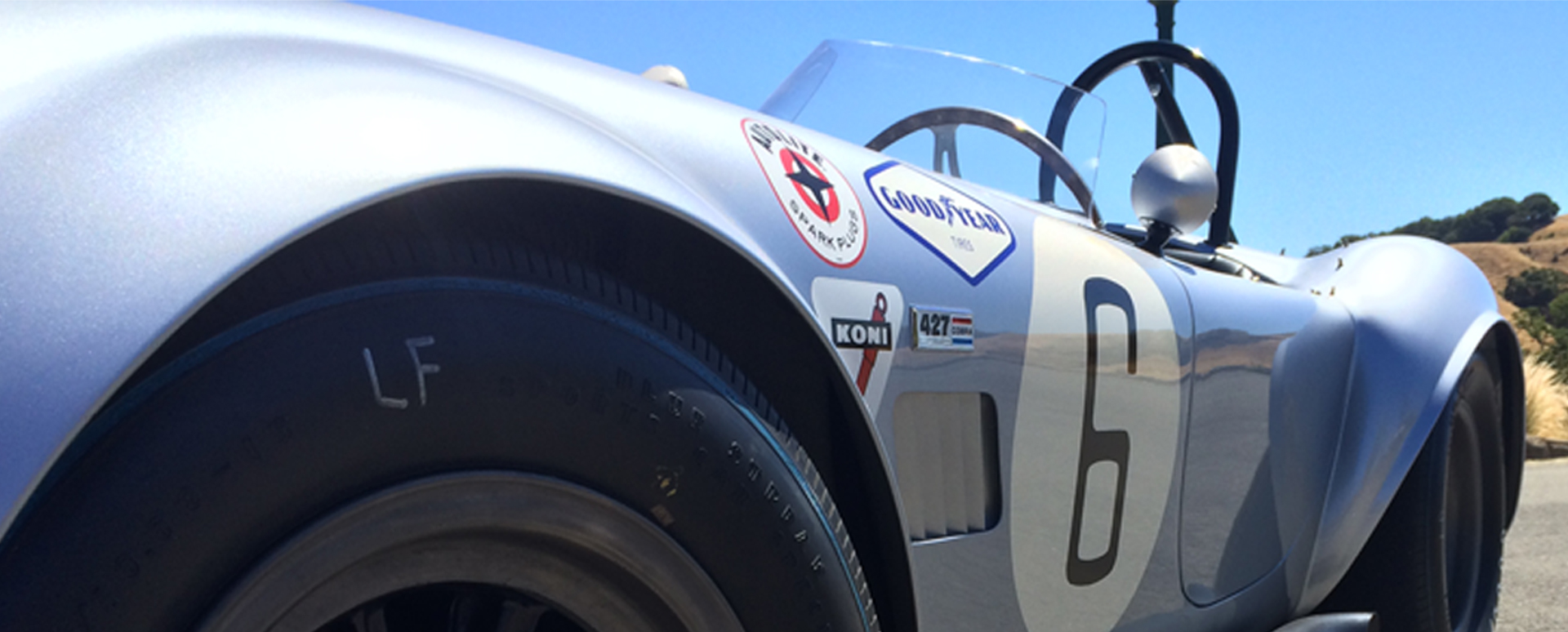
When the original Cobra was introduced in late 1962, it established a new benchmark for performance. The fact that it was a lightweight sports car stuffed full of small-block Ford V8 gave it a personality and appeal that was different from all other cars of its ilk. Sports cars of similar size offered substantially less power (think Austin-Healey or MG), while other cars with equal torque and horsepower were inevitably much heavier (such as the E-type Jaguar and the Corvette).
Things changed in the two years that elapsed between the introduction of the leaf-spring Cobra and its successor. The Cobra’s closest rival in the U.S.—the Corvette—was rumored to be upping the ante by adding a big-block 396 cubic-inch engine to the option list for the first time. Not wanting to see the winning Cobras relegated to second-place, Shelby American had to mount a preemptive strike. The result was the 427 Cobra.
Interestingly, the initial plan, as recounted in press releases of the period, was to offer the “new” Cobra— referred to in-house as the “Cobra II”—with a choice of either the 289 high-performance small-block that had made the leaf-spring cars famous, or the 427 big-block FE-series engine, derived from the early ’60s 352 Ford engine block. Ken Miles had actually been quoted as saying that a properly prepared coil spring Cobra with a full-race 289 engine would probably be quicker on U.S. road race circuits due to its light weight and better weight distribution. If this turned out to be true, it certainly wouldn’t look good for a Cobra with a smaller engine to be able to beat the pants off one with a substantially larger engine. Eventually it was decided to keep things simple and offer only one engine in the new model Cobra: the 427. And that’s what they would call it —not the “Cobra II.” The thinking was along the lines of, “Let them eat cake—and plenty of it.”
In Europe things were entirely different. Not only was the price of fuel far higher than in the U.S., but additional tariffs were levied on cars in direct proportion to their engine displacement. To AC Cars, the use of a 427 powerplant as the base engine for the lightweight sports car they had been selling throughout Europe made no sense at all. They wanted to market the new Cobra body style (it made the original Cobra look outdated) so some thought was given to creating a special AC model using the coil-spring 427 Cobra chassis and bodywork (in this case, the narrow rear-hip design found on only 30 or so of the earlier U.S.-spec 427 cars) mated to the familiar lightweight, high-performance 289 Ford V8 engine.
The musclecar craze was in full bloom in the U.S. by 1966. Mid-size sedans were packing big-block engines and straight-line performance was king, often at the expense of handling and braking. AC’s introduction of the “AC 289 Sports” in the spring of 1966 included their statement that a true sports car—which is what AC Cars was known for long before the advent of the Cobra—valued power, handling, braking, and open-air motoring in equal measure. This is precisely what the AC 289 Sports delivered.
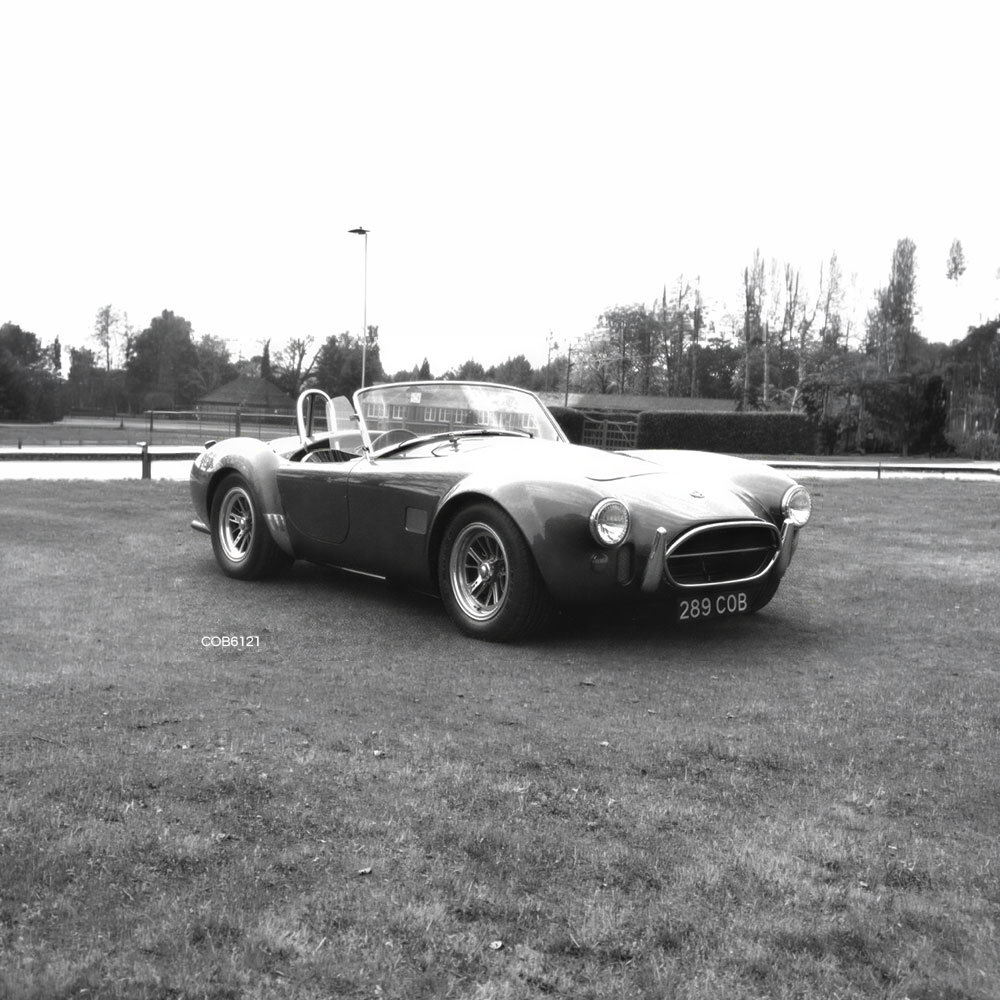
Between April of 1966 and February of 1969, a mere 25 examples of the AC 289 Sports were produced. Two additional cars were sold off in incomplete form. Similar to the leaf-spring cars that preceded them, the bulk of AC 289 Sport production was in right-hand-drive configuration, intended for delivery within the U.K. COX6111 was the first car to be sold outside of the UK (purchased by a buyer in Switzerland) and was also the first of the only 8 left-hand drive examples built.
COX6118 was sold to Belgium; COB6121 was sent to the Channel Islands; COX6122 and 6123 were both purchased by buyers in the U.S. COX6126 was sold without an engine to an American buyer who installed a 427 engine, and the last car in the series, COB6127—which was originally intended as a gift to AC Chairman Charles Hurlock—was sold as loose parts and constructed in a nearby garage. COX6125 was the last AC 289 to leave the factory. Its sale in February of 1969, to a British buyer who took it with him to Italy, closed the books on the production of Thames Ditton Cobras. Of the 27 AC 289 Sports sold, only 8 went to buyers outside the U.K.
Some press reports of the period called the car “dated,” and an argument could certainly be made supporting that point. Sports car buyers, one could assume, desired and expected new designs and technology. No doubt many knew the Cobra evolved from an early ’50s design. Buyers had plenty of alternatives to the AC 289 Sports, including an in-house competitor with a more modern and sleek design called the AC 428 Frua. This car was based on a lengthened coil-spring Cobra chassis and was more a Grand Touring car than a sports car. AC Cars could see the end of Cobra production coming. They began searching for a company to construct a prototype they had designed. Assisted by the Swiss AC importer Hubert Patthey, they settled on the Italian coachbuilder Frua. It was based on a lengthened coil spring Cobra chassis and employed a more modern look—straight lines and sharp angles compared to the Cobra’s gently rounded curves.
The prototype, a convertible with an aluminum body, was completed in time for the 1965 London Motor Show. Initially the plan was to use a 427 Ford V8 and the car was tentatively named the “AC427.” It was well received and the go-ahead was given to Frua to begin production. However it was decided that the 428 cubic-inch Ford engine would provide an adequate level of performance. Renaming the car the “AC428” would also eliminate any confusion over the Cobra 427.
Using a 428 engine saved some money, which helped offset the additional cost of shipping the chassis to northern Italy where they were fitted with bodies by Frua (now made of steel) before being returned to Thames Ditton for completion. Production began in 1967 and industrial unrest in Italy caused some supply problems. A fastback coupe body was also added the following year. A total of 51 fastbacks and 28 convertibles were made before production ended in 1973.
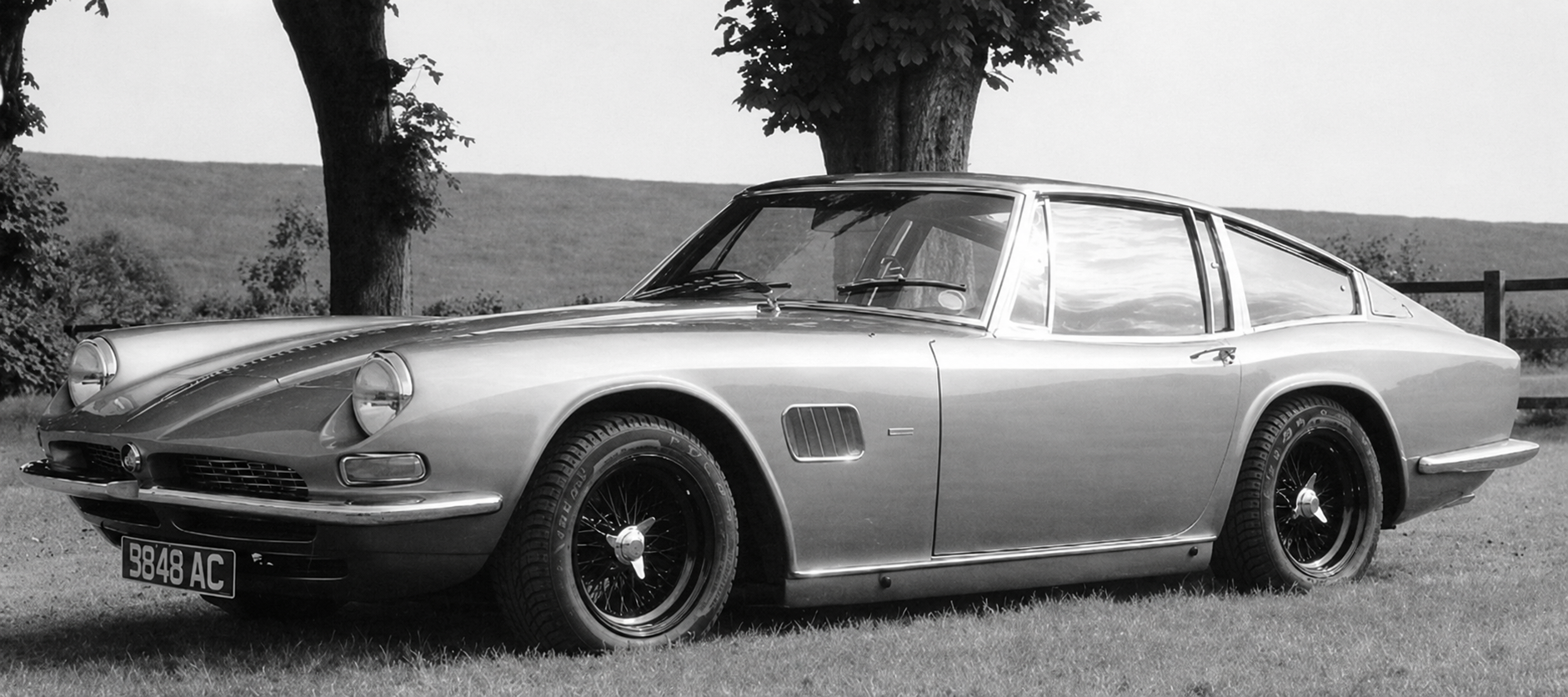
AC Cars used a “CF” prefix with the Frua chassis, starting with #1 and ending with #61. To designate the models which were exported, an “X” was added to the prefix. Fewer than 20 of the total 61 cars produced were CFX numbers and all were left-hand drive. Coupes and convertibles were mixed in production in no particular order. The VIN does not indicate if a car was a coupe or a convertible.