Throughout Cobra production both AC Cars, Ltd. and Shelby American continually looked toward the future. Each was aware that the Cobra project, in its present form, would not last indefinitely. The opportunities for spin-offs, prototypes, show cars or one-offs were continually surfacing—especially at AC Cars. AC found themselves in what was, for them, the embarrassing position of what Shelby considered their parts supplier. The company had a proud history as an automobile manufacturer that dated back to 1902. Suddenly they realized that the major portion of their business was not building cars but supplying parts. So, whenever someone came to them with an idea for a show car—or when they had an idea of their own—they took action. This resulted in a number of prototypes, one-offs and experimental cars and chassis built both during and after the production of Cobras, using Cobra chassis or modified versions of them. These chassis carried unique serial numbers and, as such, can be identified. The inclusion of these cars in this registry is not meant to infer that they are legitimate Cobras. On the contrary, our purpose is to provide as much information about them as we are able to gather so that they are not mistaken for or misrepresented as genuine Cobras.
CSX5001- CSX5002
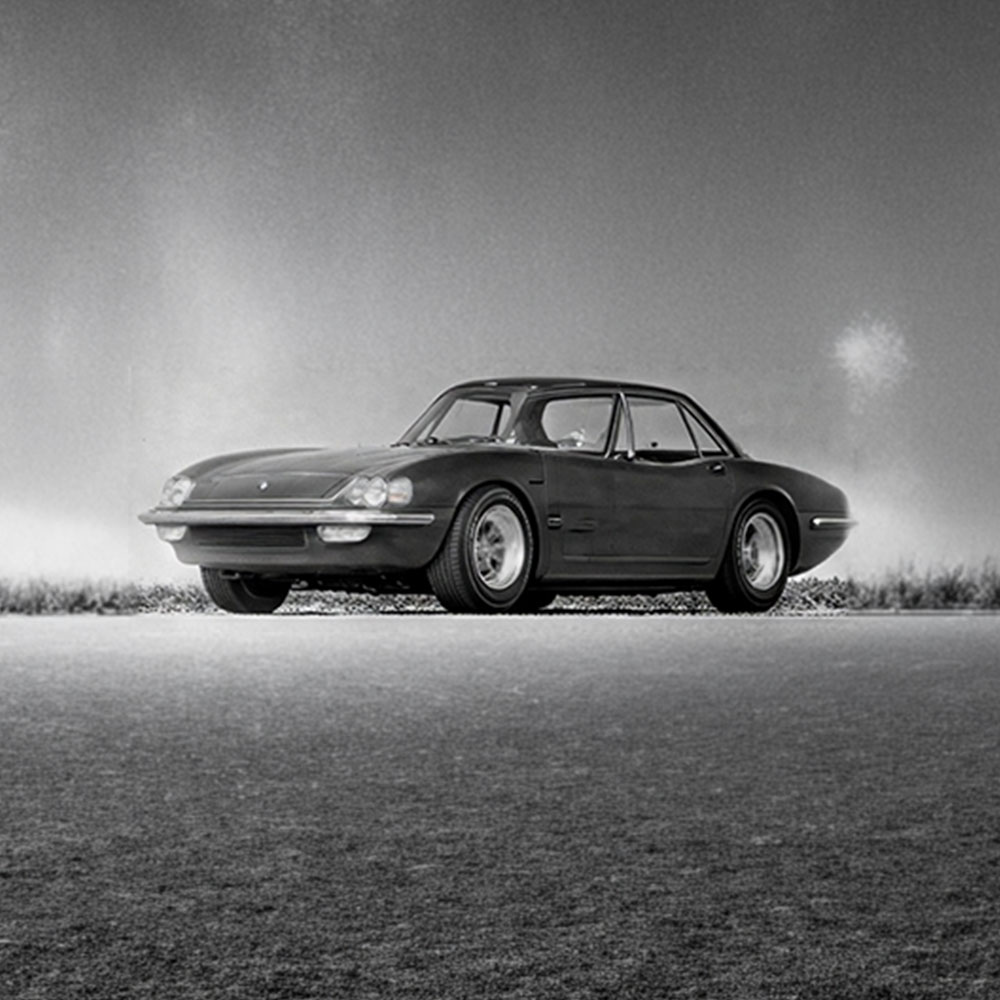
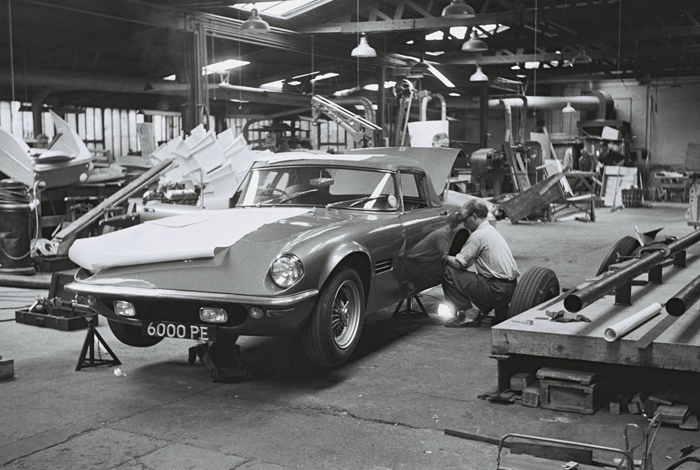
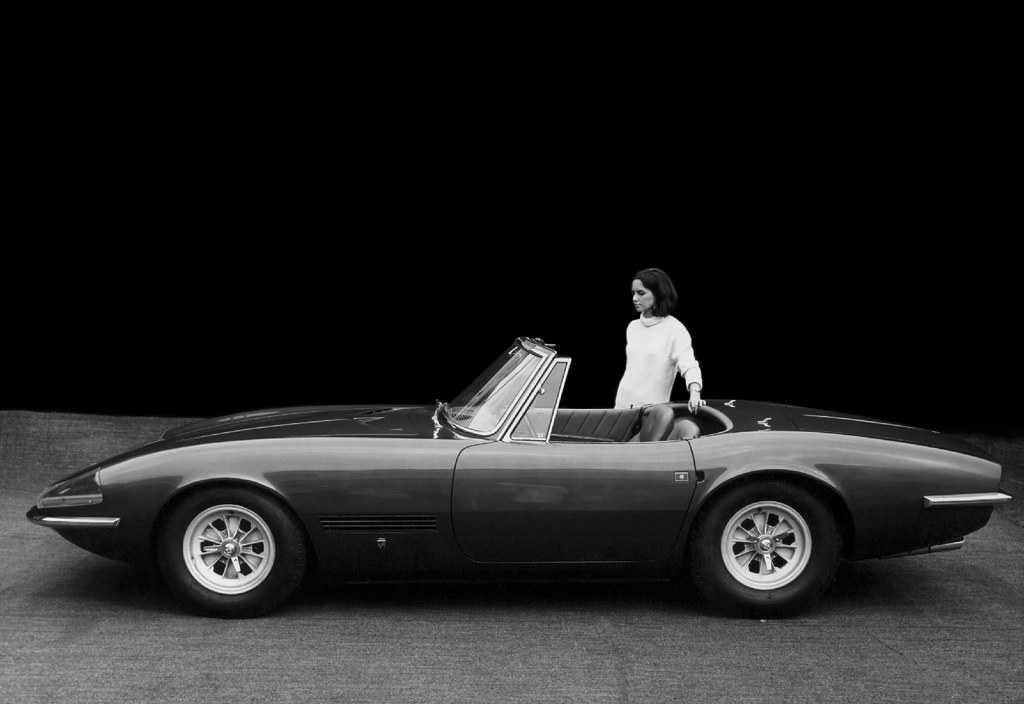
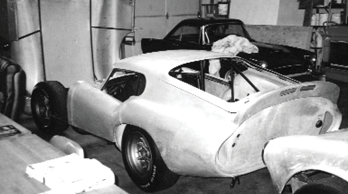
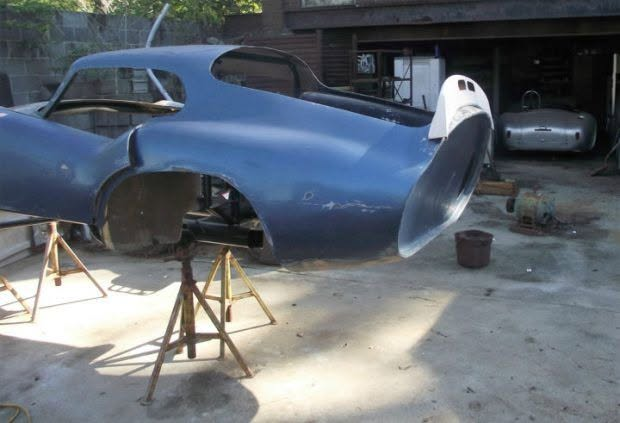
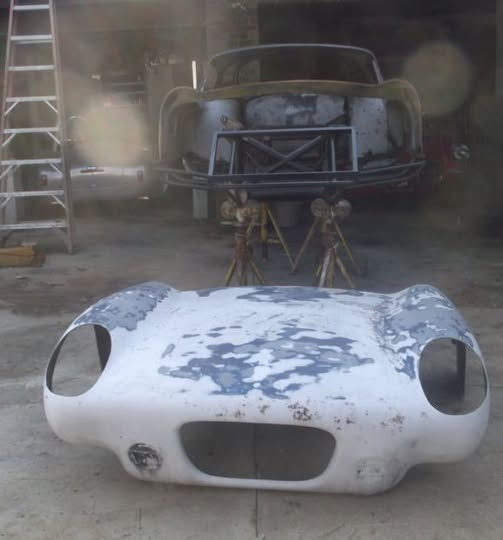
Two prototypes for Ghia-bodied Cobras were built in 1966 for Shelby American.
They were assigned the serial numbers CSX5001 and CSX5002. Their bodies were very similar and they bore a strong
resemblance to the AC 428 Frua. Both cars were pictured in Style Auto Quarterly No. 9, Winter 1965/1966. [Both
cars are pictured, above, but it is not clear which is which number.] Both cars used Halibrand FIA 6-spoke
magnesium wheels and one featured a removable hardtop. At last report, both cars were in England and have been,
or were reported to be in the process of, being built into 427 Cobra roadsters.
HEM-6
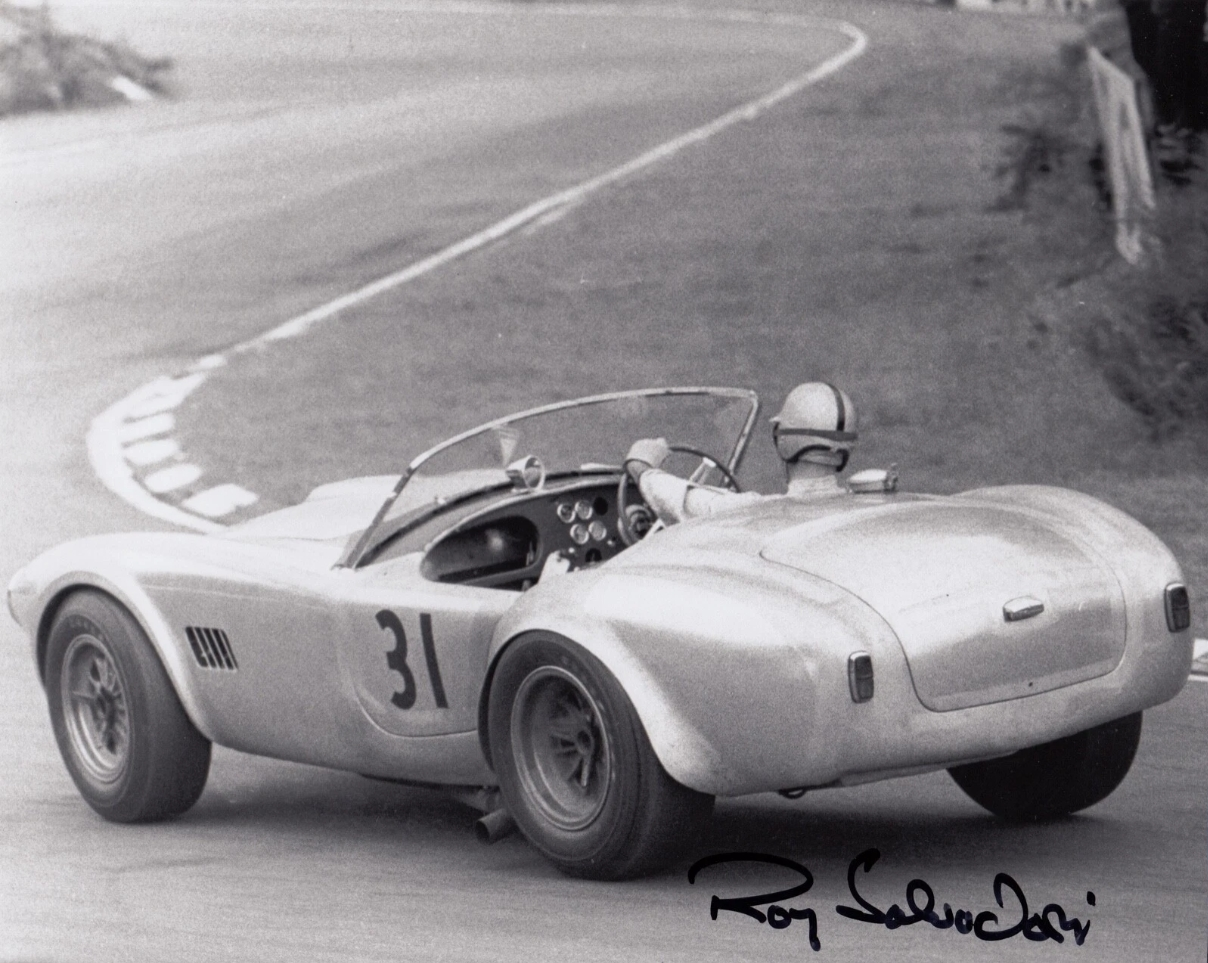
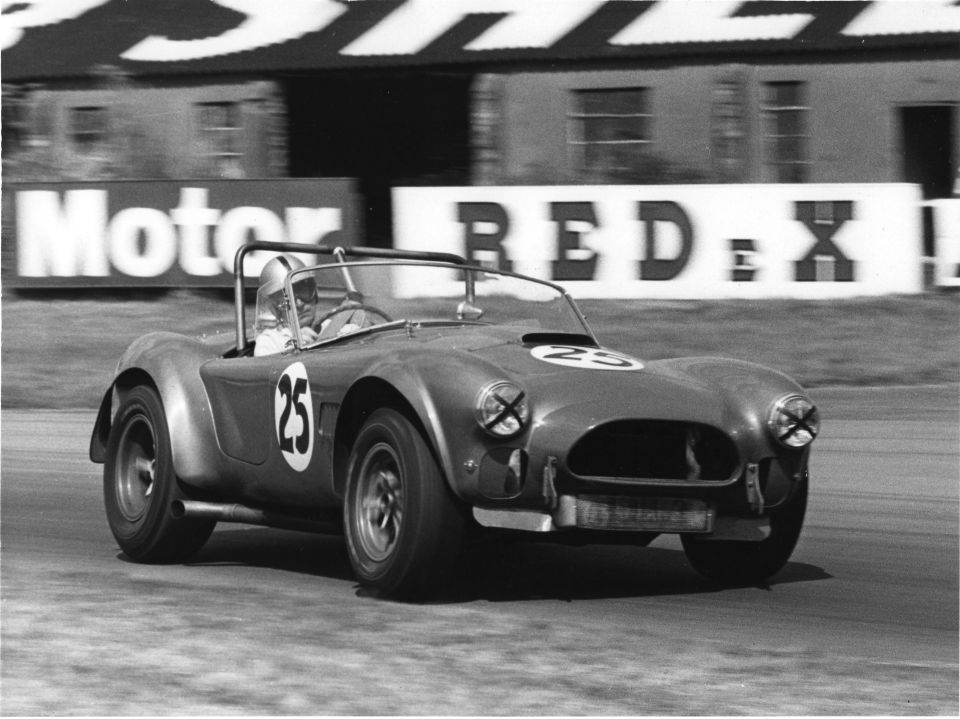
This serial number was assigned to a right-hand drive Cobra built by AC Cars to FIA racing
specifications (cutback doors and FIA flares, as well as other competition features). It was sold unfinished (no
engine or transmission) to C.T. “Tommy” Atkins in England. It was driven by Roy Salvadori and Chris Amon in
British events in 1964. In 1965 it was sold to The Chequered Flag dealership and driven by Roger Mack. It is
currently restored to show condition.
CSX3063
In 1965 the FIA required that 100 cars be built in order for them to qualify for its Grand
Touring class. When FIA inspectors arrived at Shelby American in April of that year, only 51 cars had been
completed and were sitting at Shelby American. Certification was subsequently denied and Shelby immediately
instructed AC Cars, Ltd. to begin building street models. A number of competition chassis were still under
construction at AC Cars when Shelby’s order was received, and they were completed before street chassis
production began. A couple were finished as competition cars. One became the 427 Type 65 Super Coupe and two
ended up as “chassis-only” — one became the Willment 427 Coupe, CSX3055, and the other was numbered CSX3063. Why
there was a gap of unused numbers between CSX3055 and CSX3063 is a question that only someone at AC Cars can
answer. According to AC Cars’ own production records, CSX3056 through CSX3062 and CSX3064 through CSX3099 were
never used. CSX3063 was completed as a 96-inch long rolling chassis, invoiced to Shelby American on May 4, 1965
and shipped to the Ghia Styling Studios in Turin, Italy. A special show car was built on this chassis and was
reportedly displayed at the 1967 Brussels and Paris auto shows. The chassis next surfaced in Texas, in 1975. By
the time it was purchased by Cobra restorer Mike McCluskey of Torrance, California in 1979, the main frame had
been cut in half (with both halves adding up to exactly 90-inches) but without any suspension or substructure of
any kind. McCluskey’s intention was to rebuild the chassis to 427 Cobra S/C specifications but the project
required too much of everything — time, effort, money and parts — so he sold the chassis and the parts he had
accumulated for its rebuild. By now a title, traceable back only to the late 1970s, accompanied the
conglomeration of parts, which changed hands a couple of more times and finally ended up with an exotic car
dealer in Texas in 1987. He attempted to sell the “car” through an advertisement in Hemmings which described it
as being damaged but with many new parts — less engine, transmission, rear end and seats. At one point, the
attempt was made to attach a fictitious history to the chassis (that it had been completed as a
full-specification 427 Cobra competition roadster by Shelby American in 1967 and SCCA raced). This was not
supported by evidence of any kind. Historically, CSX3063 was a 96-inch wheelbase rolling chassis and nothing
more. The fact that its serial number is at the end of 427 Cobra production in no way validates this chassis as
being anything. AC sent a lengthened rolling chassis to Ghia who, in turn, put a one-off show car body on it.
They then removed the body and the base chassis was all that remained. The fact that the serial number is part
of the 427 Cobra competition production is only a coincidence. This chassis has, since, been built into a 427
Cobra replica.
AC MK III COUPE
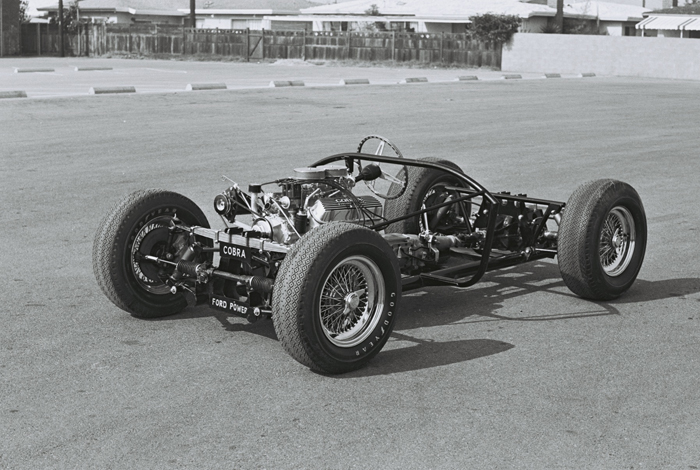
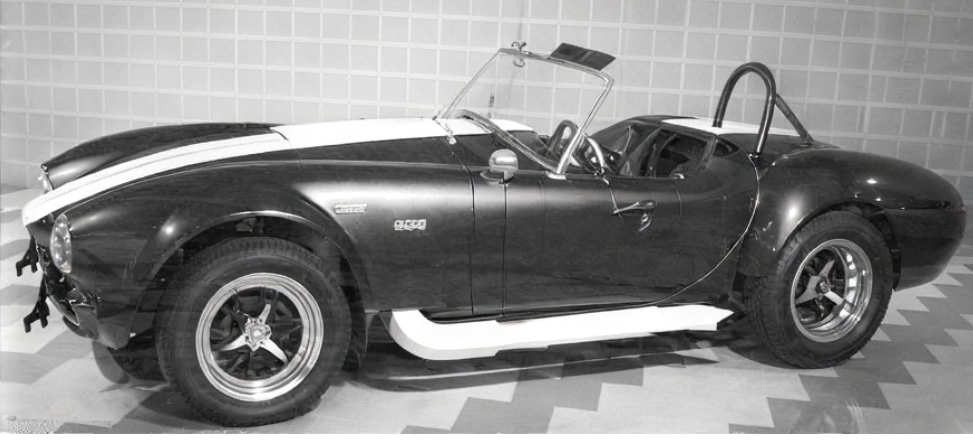
When the 427 Cobra coil spring chassis were being constructed, AC Cars built one for
themselves to be constructed as a racing coupe. It looked very much like a small block Daytona Coupe. This car
was never completed, existing only as a coil spring chassis with tubing subframe and aluminum skin. No serial
number was ever stamped into the chassis. In the 1970s the car was purchased by Bill Fone of England. In the
late 1970s it found its way to Holman-Moody in Charlotte, North Carolina still in original (unfinished)
condition. It is presently owned by Larry Miller (Salt Lake City, Utah) and on display at the museum he created
at Miller Motorsport Park in Tooele, Utah. The Coupe is still in its original, unfinished condition.
EFX CHASSIS
In 1969, a company in Ferndale, Michigan known as Electric Fuel Propulsion, Inc.
approached chassis engineer Bob Negstad (formerly a chassis engineer at Ford, but at that time working as a
consultant) and asked him to build a chassis capable of being used as the basis for an experimental,
electric, battery-powered vehicle. Rather than start from scratch, Negstad recommended that they use a
modified coil spring Cobra chassis. In as much as he had been the design engineer for the 427 Cobra chassis
and suspension for Shelby American, he knew that this chassis would be more than sufficient for their needs.
It would also be considerably less expensive than building a new chassis from scratch. Electric Fuel
Propulsion eventually contracted for eight of these specially built chassis to be produced. They were
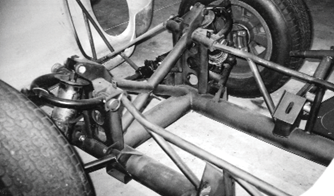
shipped directly to them from AC Cars, Ltd.. These chassis were basically the same as the standard 90-inch
wheelbase 427 Cobra chassis but were slightly modified to accept a series of large storage batteries spread
along the length of the frame instead of carrying an engine behind the front suspension. Because of this,
they had no motor mounts. They were rolling chassis with all suspension and steering components, and wire
wheels. They carried a numerically higher rear end ratio and slightly stiffer coil springs to compensate for
the increased weight of the batteries. They were given the serial numbers EFX501, EFX502, EFX503, EFX504,
EFX505, EFX506, EFX507 and EFX508 by AC Cars. The last reported whereabouts of these chassis was listed in
the last registry and no subsequent information has been received by SAAC subsequent to this.
EFX501 - unknown
EFX502 - Tom Antonelli (MI)
EFX503 - Bob Hill (CO); converted into 427 replica
EFX504 - Larry Dubas (CO) built to 427 S/C specs
EFX505 - unknown
EFX506 - Sam Feinstein (PA)
EFX507 - Tom Antonelli (MI)
EFX508 - reportedly destroyed; some parts said to have been purchased by
Lynn Park (CA) for use in a 427 Cobra restoration
With the emergence of the most recent Cobra-like vehicles built very close to original coil specifications (CSX4000, AC MK IV, Kirkham, etc) the value of these chassis as the base for reconstructing them into a 4287 Cobra has been greatly diminished.
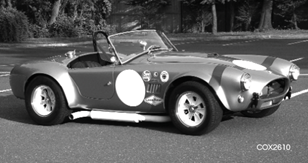
It was acquired in 2003 by Gabriel Diaz of Ft. Lauderdale, FL. In 2005 it was sold to Archie Urciuoli of Casey Key, FL. 2610 was awarded “Best English Sports Car” at the 2006 Concours Europa in Greenwich, CT.
While all of the previously mentioned chassis in this section were built by AC Cars, Ltd. using Cobra chassis components and specifications, only HEM-6 is generally regarded as a true Cobra. None of the others were originally intended to be completed as Cobras which would be exported to the U.S. They were built specifically as prototypes, one-offs or chassis only. None of these chassis fit into the Cobra production schedule (with the exception of CSX3063).
There seems to be some gray area between what is considered a “Cobra” and what is not. A case is often made that Cobras are the cars exported to Shelby American while those which were not are “ACs.” Another perspective considers both cars “Cobras” but makes a distinction between whether a car is a “Shelby Cobra” or an “AC Cobra.”
All this is a matter of semantics; where someone stands on the question very often depends on which car he owns (or on which side of the Atlantic he resides). There is no question that the chassis described in this section were built by AC Cars. However, they were never intended to become full specification Cobras under any of Shelby American’s contracts.
We have incorporated this brief section on these chassis because they really don’t fit in anywhere else. We include information about them to help enthusiasts avoid confusion between them and genuine 2000- and 3000-series Cobra chassis. This is especially important in view of the fact that in the intervening years since they were made, many have been converted to Cobra specifications and accurately restored as Cobras.
WHAT HAPPENED TO THE ONE-OFFS?
One thing that is rarely written about is the affect that the original-spec
“Cobra-type cars” such as the CSX4000s, AC MK IVs and Kirkham Cobras (e.g. cars with the same ladder-type
chassis, tubular subframe and aluminum body) have had on the handful of chassis built by AC Cars during the time
period that original Cobras were being made but not used in the production of these cars. Back in the 1970s,
before any of these latest generation cars existed, when someone discovered an AC-built chassis, such as the EFX
or Paramount film cars, it was like discovering gold. The value of 427 Cobras had risen beyond the average
enthusiast’s budget, but these chassis represented an opportunity to get into the original Cobra market—albeit
on the far reaches of the outside edge. Most of these cars were completed to 427 S/C specifications and while
they were never mistaken for originals (such is the scrutiny all Cobras receive), they were considered to be the
next best thing. When the AC MK IVs, CSX4000s and Kirkhams came along they eclipsed these cars, and they slipped
into the background. You rarely hear about them today.